

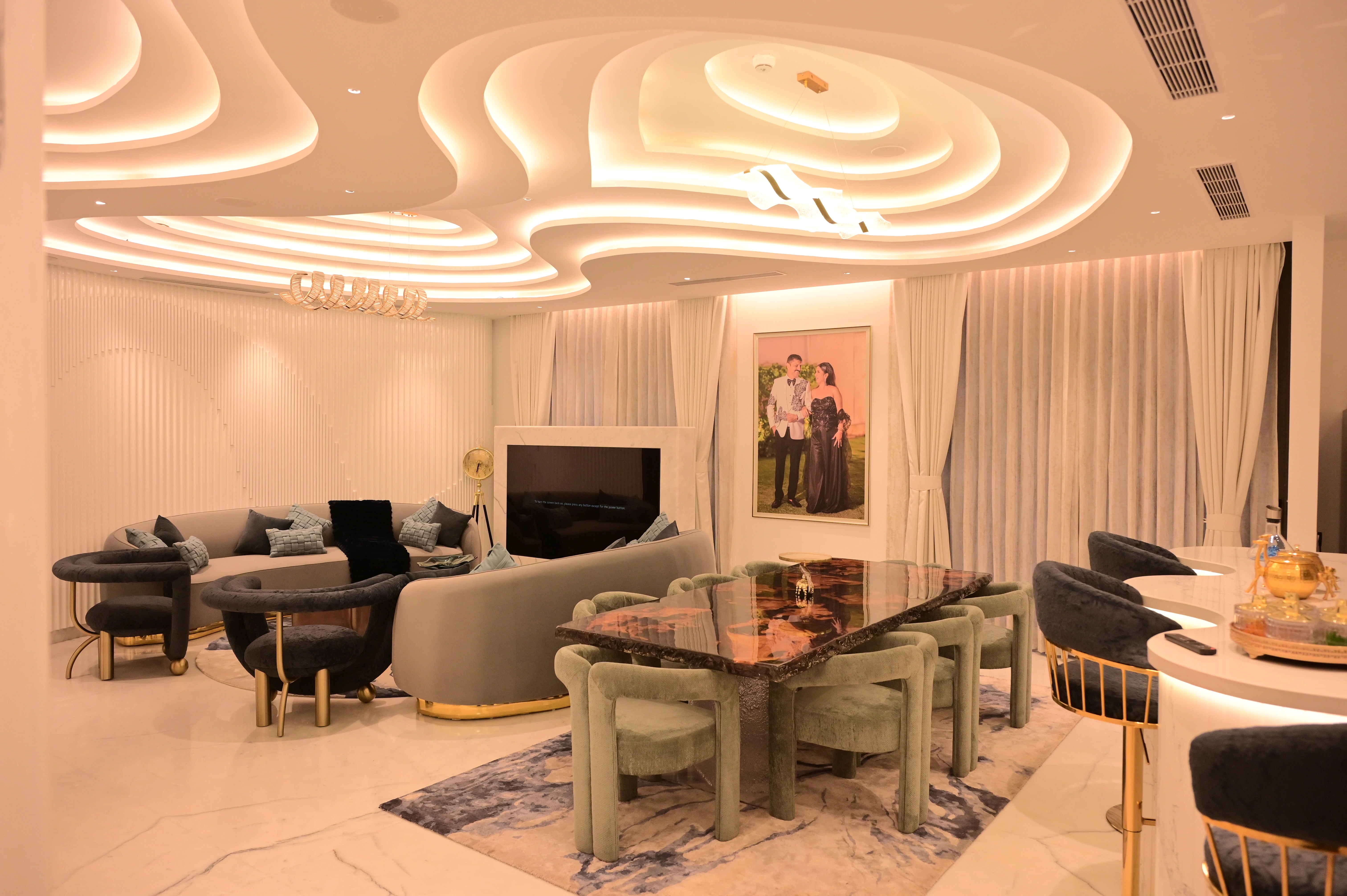
Whole-home lighting and multi-room audio work best when they're designed as one system rather than two. On a KNX platform, every room's lighting and music sit in the same scene logic - so a single keypad press, schedule or voice command sets both the light level and the soundtrack, zone by zone, across the whole home.
In most homes, lighting and music are two separate worlds - one set of switches on the wall, a speaker or soundbar doing its own thing in the corner, each with its own app. Whole-home automation brings them together. When lighting and multi-room audio run on one system, a room's light and its music become a single, coordinated experience you can set in a moment.
This guide explains how whole-home lighting and multi-room audio work, how they integrate on KNX, and how to plan them together for a home in India.
What "Whole-Home Lighting" Really Means
Whole-home lighting is more than smart bulbs. It's a designed system where every light - ceiling, cove, accent, outdoor - is on a controllable circuit, grouped into scenes that match how you live: a bright "Morning", a focused "Work", a warm "Evening", a minimal "Night". One keypad press sets the whole room, and scenes can run on a schedule or follow daylight. For the fundamentals, see our residential lighting design guide
What Multi-Room Audio Adds
Multi-room audio distributes music through the home from a central system, divided into zones. Each zone - living room, kitchen, master bedroom, terrace - can play its own source at its own volume, or be grouped so the same track plays everywhere for a party or a quiet Sunday morning.
Speaker choice depends on the room: in-ceiling architectural speakers for even, discreet coverage, or fully invisible in-plaster speakers where the design has to stay clean. Our guides to home audio installation and hidden speakers for luxury homes cover the options.
How Lighting and Audio Come Together on KNX
The real difference appears when the two share one system. Because KNX ties lighting and audio into the same scene logic, a single action can control both:
- "Evening" dims the living room and starts a relaxed playlist at a low volume.
- "Dinner" warms the dining room light and lowers music there so conversation carries, while the kitchen stays brighter and livelier.
- "Leave Home" switches off every light and mutes every audio zone at once, alongside climate and security.
One system also means one set of controls, cleaner cabling, and no two apps competing - instead of a lighting app and a separate music app that never talk to each other.
Controlling It All - Keypad, App, or Voice
Light and sound are controlled the same way, through whichever input suits the moment: an engraved Basalte or ABB keypad on the wall (no app needed, easy for any family member or guest), the home app when you're away, or voice for hands-free moments. Most homes use a mix. If you're deciding what goes where, see touch panel vs keypad vs app vs voice .
Where It Works Best
- Living and dining areas — the heart of entertaining; scenes that shift from day to evening to late-night.
- Kitchen — lively music while cooking, bright task lighting that dims for after-dinner.
- Master bedroom — a gentle "Wake" scene that raises light and plays soft music; a "Sleep" scene that fades both out.
- Outdoor / terrace — weather-appropriate speakers and facade lighting scenes for evenings outside.
Planning Light and Sound as One System
The best time to plan whole-home lighting and multi-room audio is together, at the design or renovation stage - shared zones, shared scenes, one cabling plan, one control layer. Retrofit is possible too, using wireless KNX RF where rewiring isn't practical.
As a KNX-certified integrator, TechVault designs lighting and audio as a single system rather than two projects. If you're planning a home in Noida, Delhi NCR, or Gurgaon, talk to our team about bringing light and sound onto one platform.
FAQs
Can lighting and multi-room audio run on the same system?
Yes. On a KNX system, lighting and multi-room audio share the same scene logic, so one keypad button or schedule can set a room's light level and its music together, instead of controlling two separate systems.
What is a multi-room audio system?
Multi-room audio distributes music to several rooms (zones) from a central system, with each zone able to play its own source at its own volume, or be grouped to play the same track across the home. In an integrated home it's controlled from the same keypads and app as the lighting.
Do I need speakers in every room?
No - you choose which rooms get audio zones based on how you use the home. Common choices are the living and dining areas, kitchen, master bedroom and outdoor spaces. Speaker type varies by room, from in-ceiling architectural speakers to fully invisible in-plaster speakers where design matters most.
How are lighting and audio controlled together?
Through the same interfaces - a wall keypad, the home app, or voice. A single "Evening" scene can dim the lights and start a playlist at the same time, because both sit on one KNX system rather than two disconnected apps.
Can I add whole-home audio and lighting to an existing home?
Often yes. A wired system is ideal when planned during construction or renovation, but wireless KNX RF and retrofit options can add scene-based lighting and multi-room audio to an existing home with less disruption. A site assessment confirms what's practical.
Is it better to plan lighting and audio together or separately?
Together. Planning light and sound as one system means shared zones, scenes and controls, cleaner cabling, and no two apps fighting each other — which is why both are best designed at the same stage of the project.