

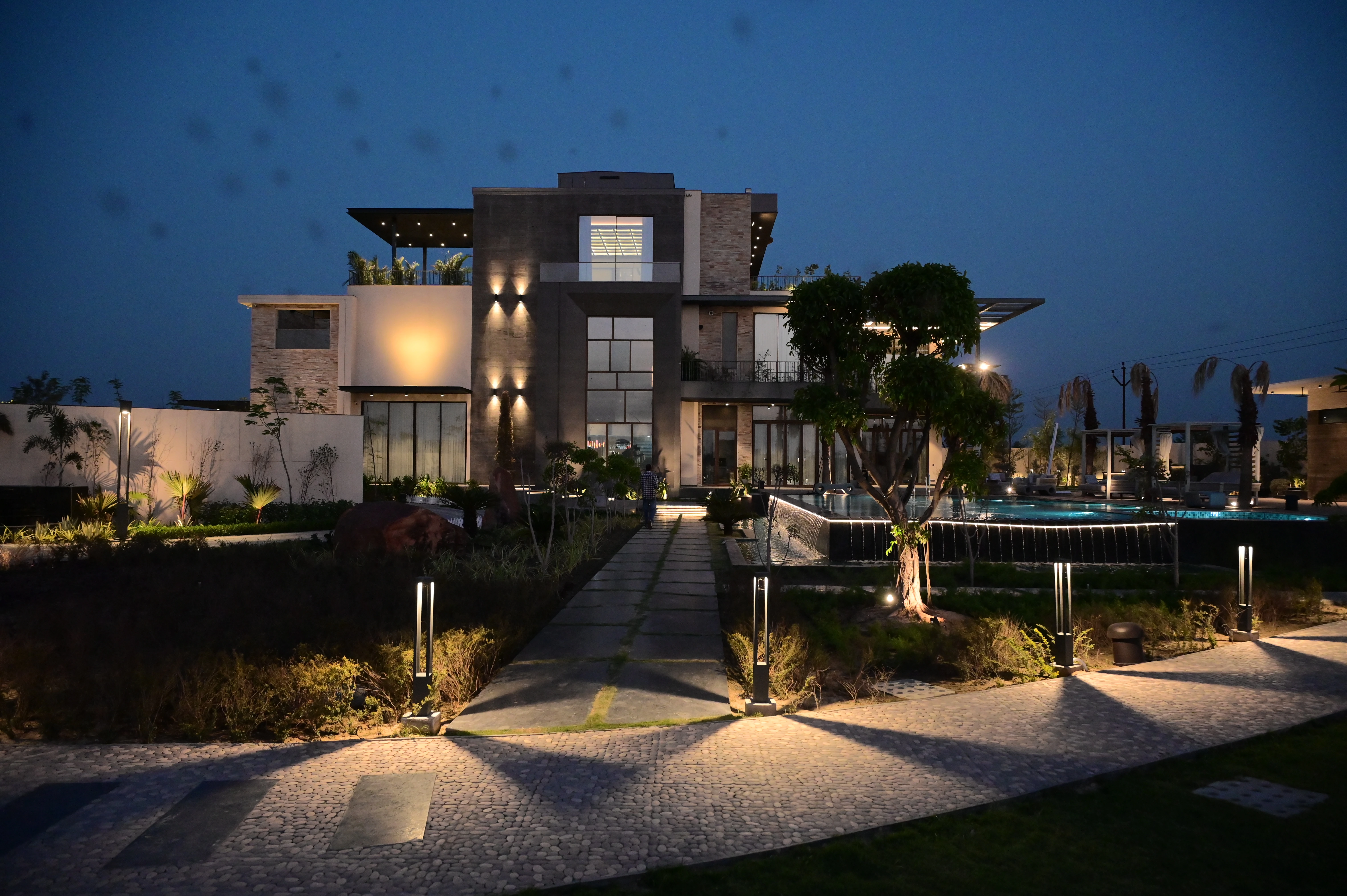
We are proud to share a project that was recently featured in Smart Home World — a 78,500 sq ft luxury residence, TechVault, designed and integrated as a single, connected ecosystem. As a CEDIA Awards EMEA Finalist 2026, we approach every home with one principle, and this project captures it exactly: technology powerful enough to manage an entire property, yet simple enough to disappear into everyday life. This is a look inside how that was done — intelligence without complexity.
The Brief: a Home that is Also a Showcase
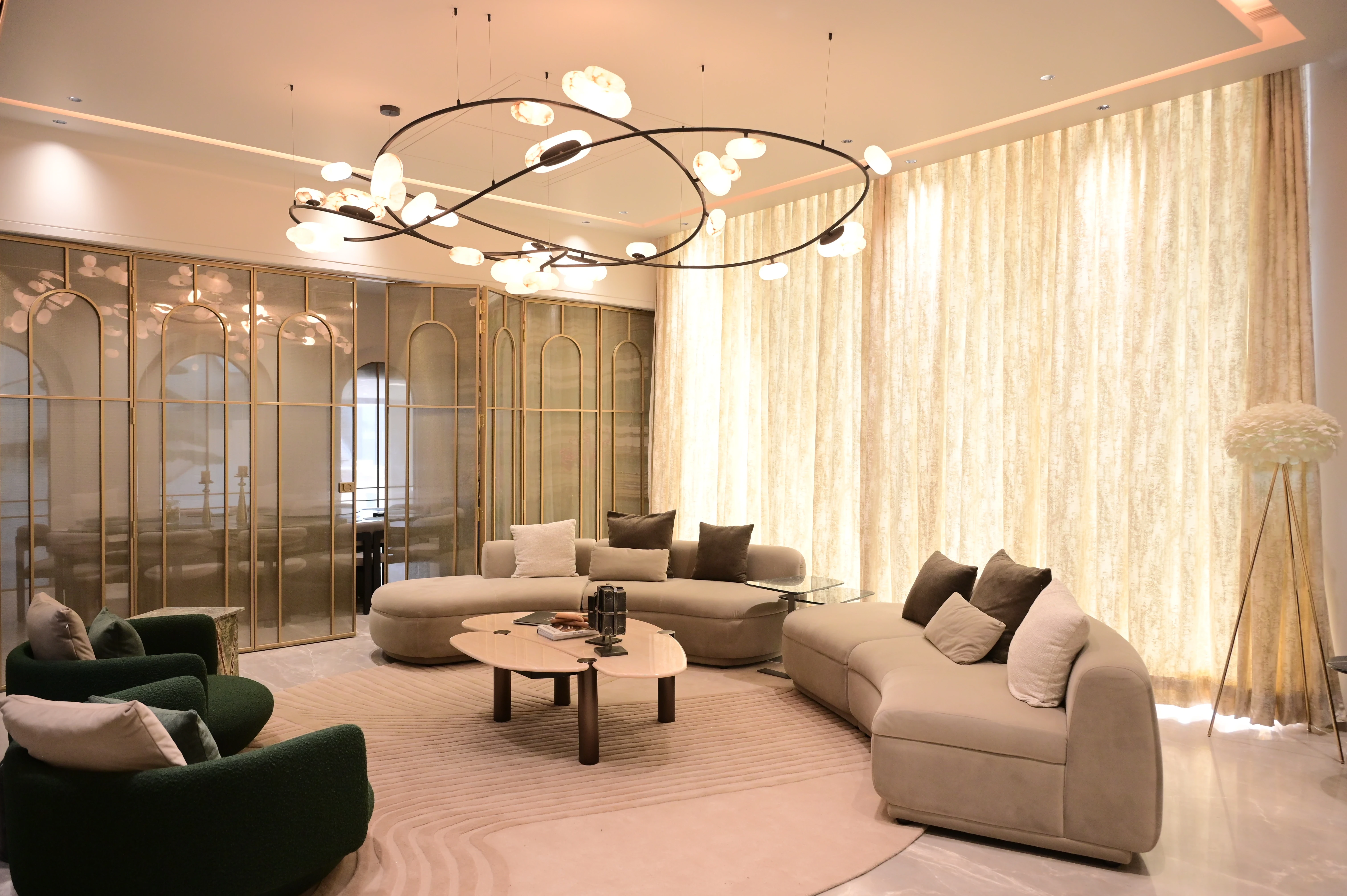
This was more than a private luxury home. Spread across three floors, the residence comprises five bedrooms, a dedicated home theatre, two terraces, a garden, a pool area and an outhouse — and it was designed to also function as a demonstration property for a prominent real estate developer.
That dual purpose set the challenge. The technology had to showcase advanced capabilities while remaining visually discreet, intuitive, and effortless to operate. With a substantial footprint and relatively few permanent occupants, our approach was to make the technology powerful enough to manage every aspect of the property, yet simple enough to disappear into everyday life — a connected environment where automation, AV and essential home systems work seamlessly together, delivering a refined experience for residents while remaining ready to demonstrate its capabilities at any moment.
The Automation Backbone: ABB KNX
At the core of the residence is an ABB KNX-based automation platform, selected for its open-protocol architecture, reliability at scale and long-term upgradeability. The backbone brings together multiple building and entertainment subsystems — AV, DALI lighting, climate control, motorised blinds and curtains, security, CCTV, smart locks, video intercom, gate and garage control, and indoor and outdoor audio.
Rather than operating these systems independently, they are unified within a single application, so the entire property can be managed through one interface, with Alexa voice control layered on as an additional way to interact. For a property of this scale and complexity, an open, reliable standard like KNX is what makes that level of unified control dependable — our guide to how KNX works explains why.
Networking: The Foundation Beneath It All
An ecosystem this extensive depends on its network. The property's connectivity was designed around a heat-mapped mesh Wi-Fi network providing stable coverage across indoor and outdoor zones, with dedicated private and guest networks separating users and connected devices to maintain security and performance.
This network architecture provides the underlying connectivity the home's automation, AV, security, and control systems need to operate reliably across the large footprint. It is the quiet foundation that everything else stands on — exactly the point we make in our guide to home networking for a smart home.
Infrastructure-First: Planned Before a Wall Was Closed
The automation design was supported by detailed planning at the infrastructure stage — and this is where a large project is won or lost. All technical design was executed in AutoCAD, with low-voltage and electrical layouts merged into a unified drawing set. This let potential conflicts between services be identified and resolved before reaching site, streamlining installation while keeping the technology infrastructure coordinated with the architectural design. Particular attention was given to the position of every touchscreen, keypad, speaker, and sensor, so the technology integrated with the architecture rather than visually competing with it.
Audio infrastructure was planned the same way, during early construction: the entire property was pre-wired for audio, creating the infrastructure for future expansion without additional civil work. That approach later enabled full multi-zone audio across the residence without delays or disrupting finished spaces. The same infrastructure-first thinking proved its worth when the client requested additional outdoor speakers after the landscaping was complete — instead of excavating and risking damage to the finished grounds, we engineered a discreet daisy-chain wiring solution, adding the speakers without any civil intervention. This is the value of planning the backbone early, something we cover in our guide to planning home automation during a build.
Lighting: Scenes That Create a Hotel-Grade Experience
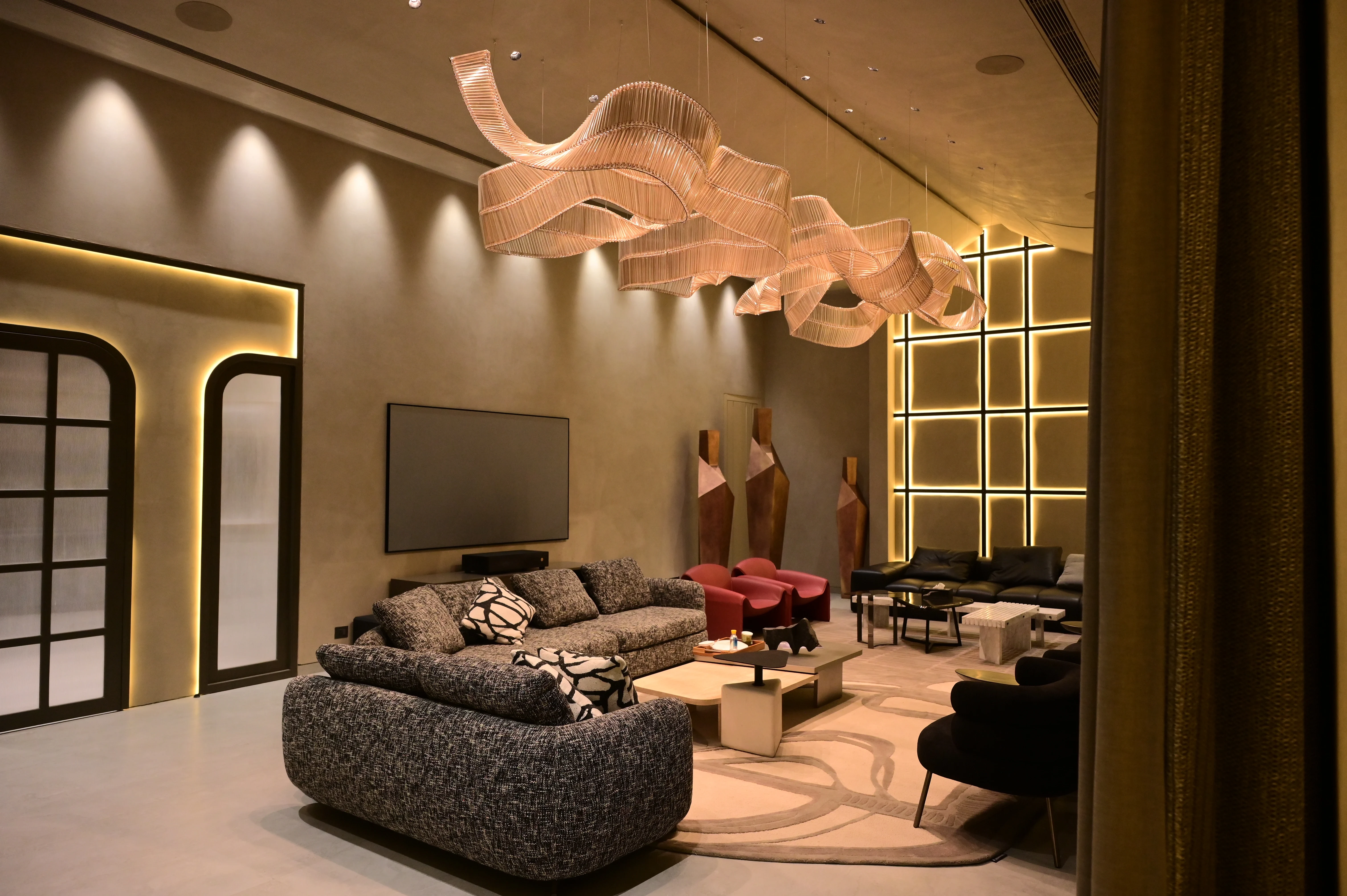
The home's lighting strategy extends well beyond automated switching and dimming. DALI lighting control is integrated into the wider KNX architecture, so lighting becomes part of programmed scenes and daily routines. Time-based facade and planter lighting scenes provide automated control of the exterior environment, while customised "Good Morning" and "Good Night" moods bring multiple systems together into predefined experiences. These coordinated scenes contribute to a hotel-grade experience while keeping interaction simple for occupants and visitors — the same scene thinking we apply in every home, explored in our guide to smart lighting automation.
Entertainment: a Dedicated Theatre and Whole Luxury Home Audio
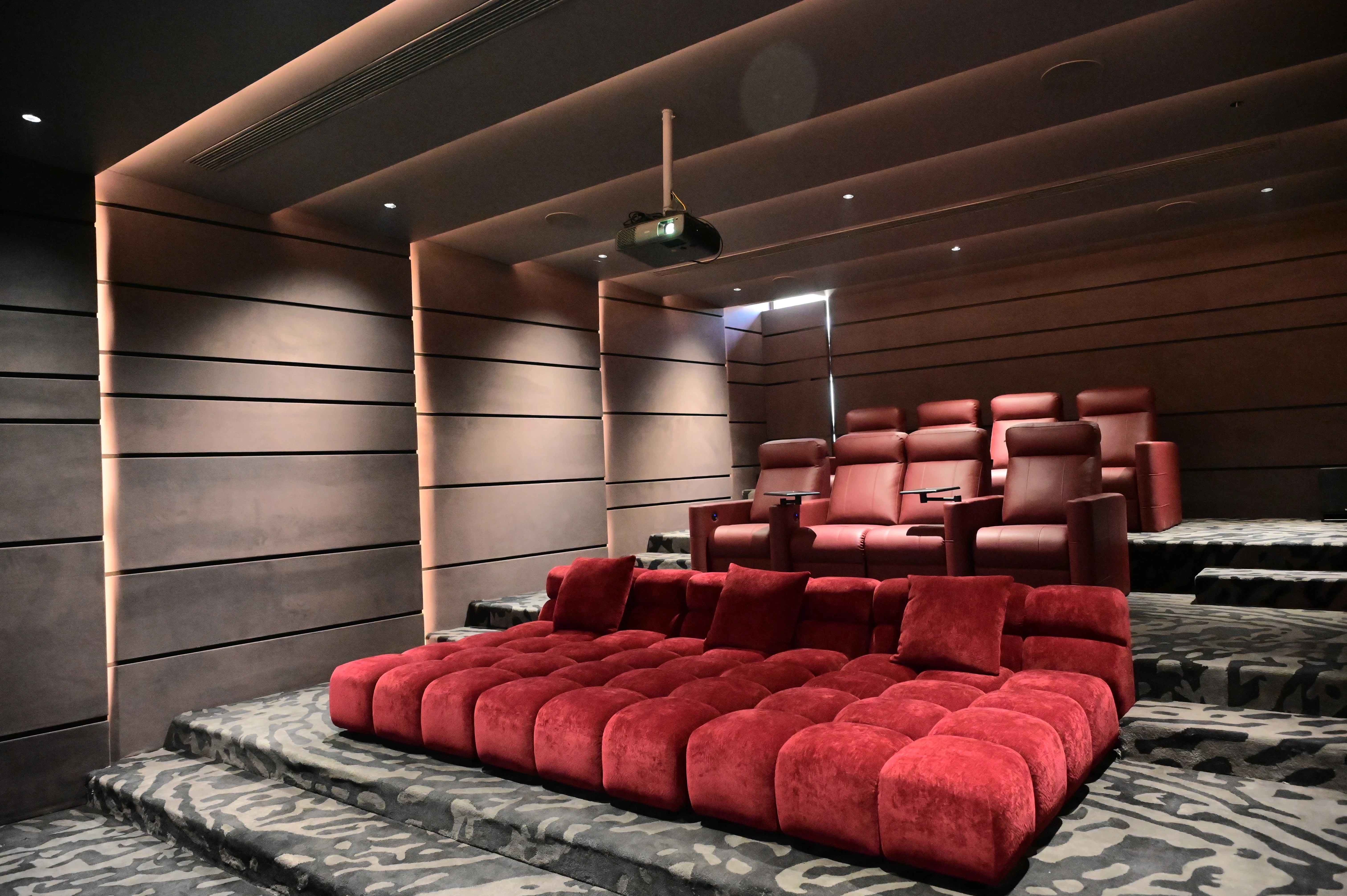
Entertainment runs throughout the residence. The dedicated home theatre uses TruAudio Elite and Ghost HT series speakers for high-performance concealed, architectural installation, driven by Denon AV receivers supporting Dolby Atmos, and a BenQ 4K UHD projector for the cinema room — with a second BenQ ultra-short-throw projector bringing a large-format cinematic experience into a living space without a dedicated theatre setup.
Beyond the theatre, distributed audio spans the whole property — premium in-ceiling speakers (including Dolby Atmos), background audio across multiple zones, and weather-protected outdoor speakers for the patios, terraces, gardens and pool area. Centralised processing and amplification tie it together with multi-room audio across the home's varied entertainment zones. Our guides to home theatre and audio-video show how we design this in every project.
Control and Environment: Powerful, yet Understated
At the room level, elegant ABB touch interfaces and keypads provide control for lighting, climate, scenes and AV, while larger centralised touchscreens enable advanced control of the whole home. Environmental automation is supported by presence sensors in washrooms, dressing rooms and utility areas — enabling automatic lighting and energy-saving strategies — with weather-resistant sensors extending intelligent, automatic control into the outdoor zones.
The result is an automation and AV ecosystem engineered around the scale and complexity of a large luxury residence, while deliberately concealing that complexity from the end user. From the KNX automation backbone and DALI lighting to distributed audio, multi-zone AV, climate, security, networking and environmental sensing, the systems operate as one coordinated platform. For a property that doubles as a demonstration environment, that balance between sophisticated engineering and effortless interaction is everything. The technology is extensive — but its presence is intentionally understated, so the architecture and experience of the residence stay at the forefront.
Intelligence Without Complexity - in Every Home We Design
This project captures what we aim for in every home, at every scale: automation powerful enough to run the whole property, designed so well that you never have to think about it. Whether it is an apartment or a 78,500 sq ft residence, the principle is the same — a reliable, open-standard system, planned from the infrastructure up, that makes a home effortless to live in.
We were honoured to see this project featured in Smart Home World, and we are proud to carry our CEDIA Awards EMEA Finalist 2026 recognition into every project we take on. If you are planning a home — of any size — we would love to design one around how you live. Explore our home automation service, or see more luxury villa automation ideas.
Original Source:- https://www.smarthomeworld.in/magazine/September2026.pdf