

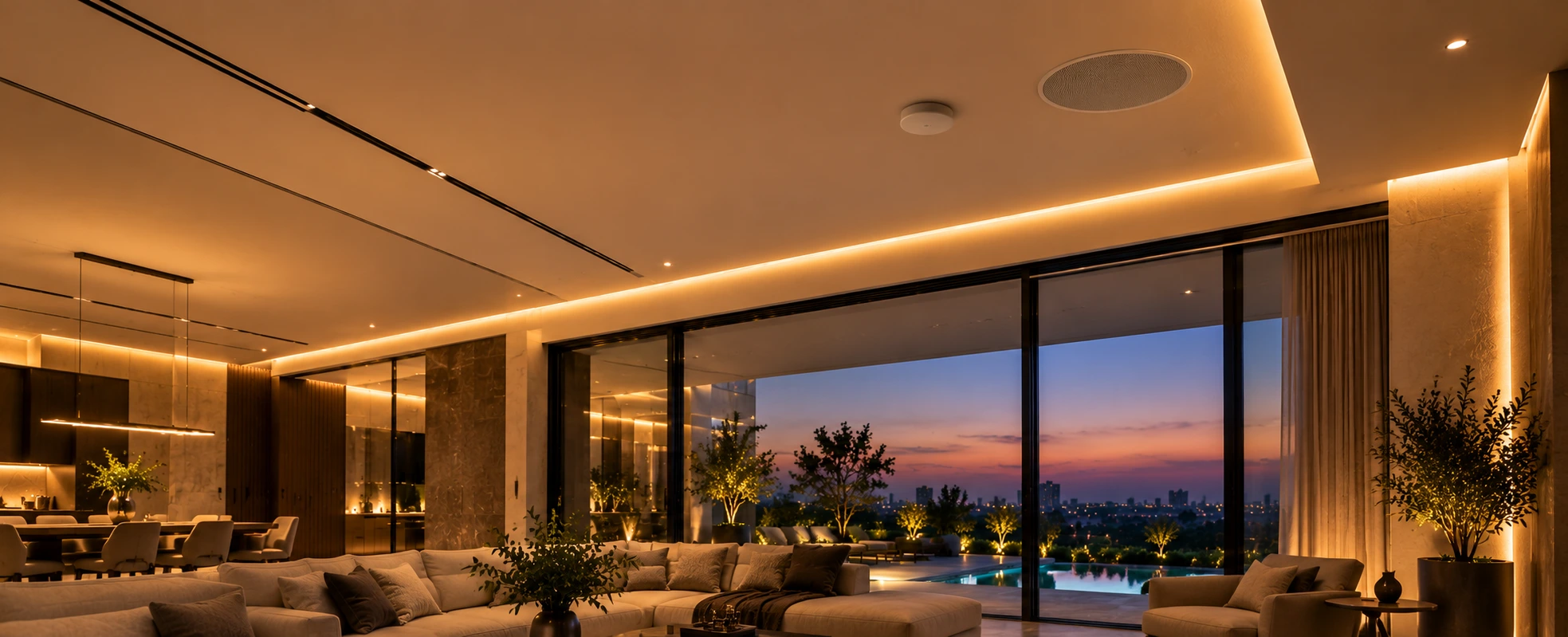
The smart home trends shaping 2027 point in one clear direction — homes that are more connected, more aware, and more discreet. Expect the Matter standard to mature into real cross-brand interoperability, AI to make automation genuinely proactive, energy intelligence (solar, batteries, EV charging) to become a core driver, health and wellness tech to go mainstream, and the biggest shift of all: away from standalone gadgets and toward fully integrated, invisible systems. In India, these are shaped by climate, energy costs, and air quality.
Every year the smart home gets a little smarter, but 2027 looks like a genuine step change — less about new gadgets, more about homes that finally work as one. Here are the trends we see defining the year for Indian homes. (For where things stand right now, see our look at smart home trends for 2026 and the future of smart homes in India.)
1. Interoperability Finally Arrives (Matter Matures)
For years, the frustration of smart homes has been devices that don't talk to each other. As the Matter standard matures, 2027 is set to be the year interoperability becomes real rather than promised — more devices from different brands working together out of the box. For homeowners, this means less lock-in and more freedom; for serious systems, open standards like KNX remain the dependable backbone, with Matter as a growing bridge. Our comparison of Matter vs KNX explains how the two fit together.
2. AI Moves From Commands to Anticipation
Voice assistants taught homes to follow instructions. The next step is homes that anticipate. AI-assisted automation is moving toward learning your routines, adjusting lighting, climate, and scenes proactively, and understanding more natural, conversational control rather than rigid commands. The promise of 2027 is a home that needs telling less and less — building on the voice foundations we cover in how KNX integrates with Alexa and Google Home.
3. Energy Intelligence Becomes a Core Driver
With rising energy costs and wider adoption of solar and electric vehicles, energy is becoming a central reason to automate — not just a nice-to-have. Expect smart homes in 2027 to coordinate solar generation, battery storage, EV charging, and household loads intelligently, running heavy loads when energy is cheapest or greenest. In India, where power costs and reliability both matter, this is especially relevant — a theme we touch on in saving nature with your KNX smart home.
4. Health and Wellness Go Mainstream
The home is increasingly seen as a wellness tool. Air quality monitoring, circadian and human-centric lighting, better sleep environments and water quality are moving from niche to expected — particularly in India, where indoor air quality is a real concern. In 2027, a smart home that actively looks after the health of the people in it becomes a mainstream expectation, not a luxury extra.
5. Privacy and Local Processing
As homes get more connected, privacy becomes a bigger priority. The trend is toward more processing happening locally, in the home, rather than everything depending on the cloud — which improves both reliability and security. Wired, local standards like KNX are naturally aligned with this, as we explain in how KNX keeps a smart home more secure — though that page may be new, so check that it's live. Expect "works without the internet" and "your data stays home" to become selling points in 2027.
6. From Gadgets to Integrated Systems
Perhaps the most important shift is philosophical. After years of buying individual gadgets, more homeowners are realising that the magic is in integration — systems designed to work as one, not a drawer of apps. In 2027, the centre of gravity moves further toward designed, integrated homes on open standards, controlled from a single app. This is the difference between a house with smart devices and a genuinely smart home.
7. Invisible, Design-Led Technology
Finally, the best technology in 2027 is the technology you don't see. Invisible and in-ceiling speakers, concealed sensors, elegant keypads and screens that disappear when not in use — the trend is for automation to integrate into the architecture rather than clutter it. For luxury homes especially, discretion is the new status symbol, as our luxury villa automation ideas show.
What This Means If You're Planning or Upgrading
If you are building or renovating, the smartest move for 2027 is not to chase any single gadget — it is to build on an open, reliable backbone (like KNX) so your home can adopt these trends without rewiring. If you already have a smart home, these shifts are a good reason to think about an upgrade path toward a more integrated, future-ready setup. Either way, planning the infrastructure well is what keeps a home ready for whatever the year actually brings.
If you want a home designed for what's next, book a consultation, and we'll help you plan it.
FAQs
What are the biggest smart home trends for 2027?
The directions shaping 2027 are greater interoperability as the Matter standard matures, more genuinely intelligent (AI-assisted) automation, energy intelligence tying together solar, batteries, and EV charging, a stronger focus on health and wellness (air quality, circadian lighting), privacy through local processing, and a shift from standalone gadgets toward fully integrated, invisible systems. In short: smart homes that are more connected, more aware, and more discreet.
How are smart home trends different in India?
Indian homes bring specific drivers: high outdoor pollution making indoor air quality a priority, hot climates and rising energy costs pushing energy-efficient automation, power reliability needs (inverter and generator integration), and strong demand for luxury, discreet design. So while global trends like Matter and AI apply, in India they are shaped by climate, energy, and air-quality realities.
Will smart homes become easier to use in 2027?
That is the goal of several 2027 trends. Better interoperability means devices from different brands finally work together, AI-assisted automation means the home anticipates routines rather than waiting for commands, and single-app control keeps everything in one place. The direction of travel is toward homes that feel simpler to live in even as they do more.
Is it worth upgrading my smart home in 2027?
It depends on your current setup and goals. If you have a few disconnected gadgets, moving toward an integrated system on an open standard like KNX future-proofs your home against interoperability issues, and AI shifts ahead. If you are building or renovating, planning for these trends now is far cheaper than retrofitting later. A site assessment is the best way to decide what is worth doing.
What smart home technology should a new home plan for in 2027?
A new home is best built on an open, reliable backbone (such as KNX) so it can adopt future trends without rewiring, with provisions for energy management (solar, batteries, EV charging), air quality and wellness, a strong network, and discreet, integrated controls. Planning the infrastructure before construction is the single most valuable decision for future-readiness.
Are these 2027 predictions guaranteed?
No — these are informed directions based on where the technology and the market are heading, not certainties. Trends evolve, and timelines shift. The safest way to benefit regardless of how the year unfolds is to build on open standards and good design, which keep a home adaptable whatever specific products arrive.
Techvault is a KNX-certified home and building automation integrator based in Noida, serving clients across India. We design home automation, lighting, audio-video, security, and building management systems on open standards as one integrated whole.